
UK–EU & Ireland Refrigerated Courier Transport & Customs Clearance Arranged
Dedicated UK-EU & Ireland Courier with Customs Arranged
Europa Xpress provides dedicated temperature-controlled courier transport between the UK, Ireland and mainland Europe, with export and import customs clearance pre-arranged through established customs agents.
We transport urgent chilled, frozen and controlled-ambient consignments directly from collection to delivery using dedicated refrigerated vehicles operating from –25°C to +25°C. There is no co-loading, parcel network or unnecessary transfer between vehicles, helping protect the consignment and its required temperature throughout the journey.
Customs support is available for eligible business-to-business movements where the sender and receiver are VAT registered and can provide the required commercial documentation. Every international movement is assessed individually because the necessary declarations depend on the goods, route, destination, value, origin and agreed Incoterms.
Commodity Codes for UK-EU and Ireland Courier Shipments
Commercial goods transported from the UK to the European Union or Republic of Ireland must be classified using the correct commodity or HS code. This code determines the applicable customs duty, VAT treatment, import restrictions and whether additional licences, certificates or inspections are required.
The exporter and importer are responsible for supplying an accurate goods description and commodity code before Europa Xpress dispatches the dedicated vehicle. Descriptions such as “samples,” “parts” or “food products” may not provide enough information for customs clearance.
The commercial invoice should clearly identify what the goods are, what they are made from, their intended use and country of origin.
Incorrect classification can delay border clearance and may result in additional duty, penalties or seizure. Where the correct code is uncertain, specialist classification advice should be obtained from the appointed customs agent before collection.

UK Export Declarations, MRNs and Goods Movement References
Commercial goods transported from the UK to the European Union or Republic of Ireland normally require a UK export declaration. Declarations are submitted through the Customs Declaration Service, which generates a Movement Reference Number when accepted.
For routes operating through the Goods Vehicle Movement Service, the relevant customs references must be linked to a valid Goods Movement Reference. The GMR is checked at the port before the refrigerated vehicle is permitted to board the ferry or use the Channel Tunnel.
Missing, invalid or incorrectly linked references can prevent check-in and create lengthy border delays. Europa Xpress therefore requires the export declaration, MRN and applicable GMR to be confirmed before the dedicated UK–EU courier vehicle proceeds to the port.
Customs clearance can be pre-arranged through established agents for eligible business-to-business shipments where the sender and receiver are VAT registered and can provide the required EORI numbers and commercial documentation.

Transit Documents for UK–EU Courier Transport
A T1 transit declaration allows eligible goods to travel under customs control from the UK border to an authorised customs office or final destination without import duty and VAT being paid immediately at the first point of entry.
The transit procedure generates a Transit Movement Reference Number and Transit Accompanying Document. The T1 must be opened correctly, presented at any required customs offices and discharged by the authorised customs agent at the destination. A T1 can be particularly useful for dedicated courier deliveries travelling beyond France to Belgium, the Netherlands, Germany, Spain, Italy and other European destinations. It can allow the refrigerated vehicle to continue towards the consignee or an inland customs facility rather than completing every import procedure at the first European port.
The receiving business and destination customs agent must be prepared to discharge the transit movement within the permitted time. Failure to close a T1 correctly can create customs debt, additional charges and delays for everyone involved in the shipment.
Europa Xpress coordinates the vehicle, route and delivery schedule around the agreed transit procedure, but all T1 arrangements must be confirmed before collection.
Customs Transport for Food, Seafood and Products of Animal Origin
Chilled and frozen food, seafood, meat, dairy products and other products of animal origin can require additional sanitary and phytosanitary controls when transported between the UK, Ireland and the European Union.
Depending on the commodity and destination, the movement may require an Export Health Certificate, TRACES NT pre-notification, a Common Health Entry Document and entry through an approved Border Control Post. Documentary, identity or physical inspections may also be required before the goods can continue to their destination.
Not every port or ferry route is authorised to process every type of controlled food product. The commodity code, ingredients, animal-product content, production information, health certification and receiving Border Control Post must therefore be confirmed before collection.
Europa Xpress plans refrigerated food and seafood courier movements around the required temperature, ferry crossing, customs clearance and Border Control Post operating hours. Refrigeration remains operational during the crossing and applicable inspection periods, with recorded proof of temperature available at delivery.
Controlled food movements are only accepted once the necessary certificates, customs agents, pre-notifications and inspection route have been confirmed.
TRACES NT, IPAFFS and Irish Customs Pre-Notification
TRACES NT is the European Union system used to pre-notify certain sanitary and phytosanitary consignments, including applicable food, animal products, plants and other controlled goods entering the EU or Republic of Ireland.
The EU importer or appointed representative may need to create the appropriate Common Health Entry Document before the refrigerated consignment arrives at the approved Border Control Post. The declaration must match the Export Health Certificate, commercial invoice, commodity code, vehicle details and planned route.
For applicable imports entering the UK, the UK importer may need to submit an IPAFFS notification and provide the required health certificates before the goods arrive. Responsibility for completing these notifications should be agreed between the exporter, importer and customs or veterinary agent before collection.
UK-to-Ireland RoRo movements also require a valid Pre-Boarding Notification containing the relevant customs references. For movements into Ireland, an Entry Summary Declaration may be required before departure. The vehicle must receive the appropriate status before it can check in for the ferry.
Europa Xpress coordinates the dedicated refrigerated vehicle and delivery schedule around the confirmed customs, TRACES NT, IPAFFS, PBN and inspection arrangements. We do not dispatch controlled goods until the required pre-notifications and receiving facilities have been confirmed.
Incoterms for UK–EU and Ireland Courier Deliveries
Incoterms establish whether the sender or receiver is responsible for transport costs, export clearance, import customs formalities, duty, VAT and delivery risk. The agreed Incoterm must appear on the commercial invoice and be confirmed before Europa Xpress dispatches the vehicle.
Under DAP terms, the seller normally arranges transport to the named destination while the buyer remains responsible for import clearance, duty and import VAT. The EU or Irish receiver must therefore be prepared to act as importer and appoint a suitable customs agent.
DDP places substantially more responsibility on the seller, including import clearance, duty and taxes. It should not be used unless the seller has the necessary VAT registration, customs representation and fiscal arrangements in the destination country.
EXW and FCA can also be used for international courier movements, but responsibility for export formalities and collection must be clearly agreed. Incorrect or contradictory Incoterms can delay customs clearance and create unexpected charges at the border.
Europa Xpress can coordinate dedicated UK–EU and UK–Ireland transport with the appointed export and import agents, but the sender and receiver must agree their customs and tax responsibilities before collection.
ATA Carnets for Temporary UK–EU Transport
An ATA Carnet can simplify customs procedures for eligible goods temporarily transported from the UK to Ireland or mainland Europe and later returned to the UK. Typical movements include exhibition materials, professional equipment, demonstration products and qualifying commercial samples.
The carnet must accurately identify every item travelling in the dedicated vehicle and be presented for endorsement at each required customs office. The vehicle’s route and crossing must therefore be planned around customs facilities that can process ATA Carnets during the required operating hours.
Failure to obtain the necessary export, import or re-export endorsements can result in customs duty, VAT and additional charges becoming payable. Goods must also be returned within the carnet’s permitted validity period and in accordance with the temporary-admission conditions.
Europa Xpress can provide dedicated temperature-controlled courier transport for eligible temporary movements, but the customer remains responsible for obtaining the carnet and confirming the required customs offices before collection.
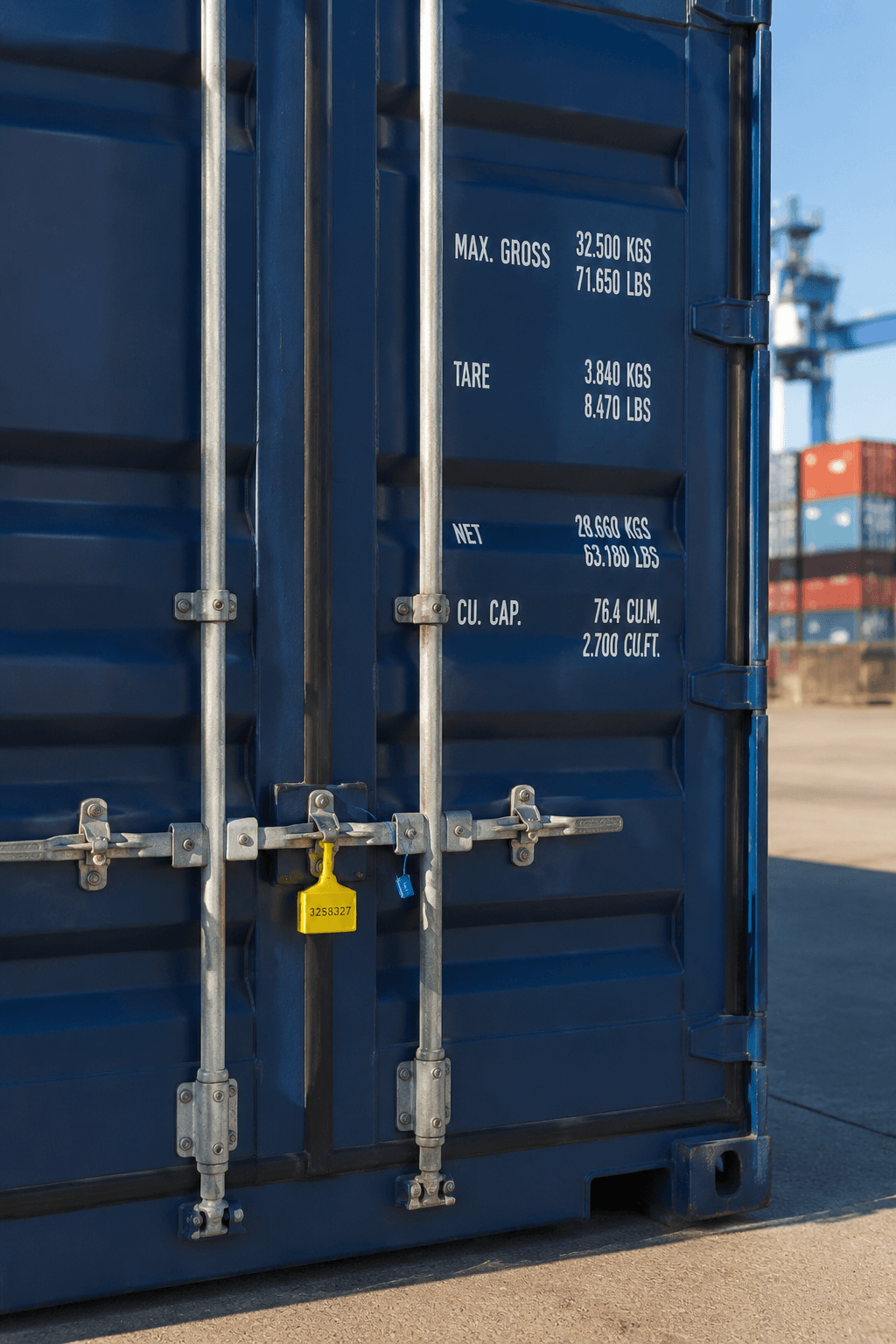
Protecting Temperature-Controlled Goods During Customs Delays
Customs inspections, ferry disruption, seal checks and Border Control Post queues can extend journey times for chilled, frozen and controlled-ambient consignments. International refrigerated transport must therefore be planned around more than the expected driving and crossing time.
Europa Xpress coordinates the customs status, ferry or tunnel booking, inspection facilities, driver hours and delivery schedule before dispatch. Refrigeration remains operational during the journey, ferry crossing and applicable customs waiting periods, subject to port safety requirements.
Goods travel on the same dedicated temperature-controlled vehicle from collection to delivery wherever possible. There is no co-loading, parcel hub or unnecessary trans-shipping, reducing the risk
Current French ELO and Irish PBN Requirements
Since 20 April 2026, each transport unit using the French Smart Border with the UK must have one valid Obligatory Logistics Envelope, known as an ELO. This applies to loaded and empty vehicles using applicable accompanied or unaccompanied RoRo crossings in either direction.
The ELO combines the relevant French customs and safety-and-security references into one barcode. It must be prepared and closed before check-in. A vehicle without the required ELO can be refused boarding or experience delays in processing its customs formalities.
ELO applies specifically to the French Smart Border and does not replace UK export declarations or the UK Goods Movement Reference.
Commercial RoRo movements between the UK and Republic of Ireland require a valid Irish Pre-Boarding Notification. For goods entering Ireland, an Entry Summary Declaration may also be required before departure. The relevant customs references must be linked to the PBN, and the movement must receive the correct status before ferry check-in.
Dedicated Customs Courier Routes to Ireland and Europe.
Europa Xpress provides dedicated refrigerated courier transport from businesses throughout the UK to Ireland and mainland Europe. Regular routes include Holyhead–Dublin, Cairnryan–Belfast, Liverpool–Belfast, Dover–Calais, Dover–Dunkirk and the Channel Tunnel.
European coverage includes France, Belgium, the Netherlands, Germany, Luxembourg, Spain, Italy, Malta and other destinations. Irish coverage includes Dublin, Cork, Galway, Limerick, Waterford, Belfast, Newry, Lisburn and Derry.
Find further information about our refrigerated and temperature-controlled courier services https://europaxpress.co.uk/ireland-temperature-controlled-courier/ Ireland temperature-controlled courier service https://europaxpress.co.uk/northern-ireland-refrigerated-courier/ Northern Ireland refrigerated courier service https://europaxpress.co.uk/uk-to-paris-temperature-controlled-courier/ UK-to-France temperature-controlled transport and https://europaxpress.co.uk/uk-to-netherlands-temperature-controlled-courier/ UK-to-Netherlands refrigerated courier service
Request a UK–EU or Ireland Refrigerated Courier Quote
For an accurate transport and customs assessment, provide the collection and delivery postcodes, goods description, commodity code, number of packages or pallets, total weight, dimensions, value, required temperature and preferred collection time.
Customs clearance must be confirmed before dispatch. Europa Xpress provides the dedicated transport and coordinates established customs agents but does not provide legal, tax or commodity-classification advice.
Call Europa Xpress on 0191 468 3059 or https://europaxpress.co.uk/temperature-controlled-courier-quote/
Europa Xpress Ltd | 2 Howdene Rd, Newcastle upon Tyne NE15 7HT, UK | +44 191 468 3059 VAT GB488521848
Latest Customs Changes From April 20 2026
- Mandatory Status: The ELO, previously voluntary, becomes a mandatory “port pass” for crossing the Smart Border.
- No ELO = No Crossing: Vehicles without a valid, closed ELO presented at check-in (Pit stop) will be refused boarding.
- One ELO Per Truck: Whether accompanied or unaccompanied, every transport unit needs its own 19-character ELO barcode.
- Pre-arrival Filing: All documentation must be finalised before the vehicle arrives at the port. Once the ELO barcode is scanned at the border, no further modifications can be made.
- ICS2 Connection: For GB to France, the ICS2 Entry Summary Declaration (ENS) must be filed to generate an ENS MRN, which is then included in the ELO.
- Empty Trucks: The requirement applies to all trucks, including empty ones.